
English
Views: 0 Author: Naccon Power Technology Co.,Ltd Publish Time: 2026-08-06 Origin: Naccon Power Technology Co.,Ltd


Battery Name: Alkaline Zn-MnO₂ LR20 battery (non-rechargeable)
Category: Portable battery
Chemistry system: Zn-MnO₂
Model: LR20
Trade/Brand name: NACCON/No-brand/OEM brands
Nominal Voltage:1.5V
Production Date: According to customer requirements, generally printed on the battery body:
PD:YYYY-MM
Shelf Life: Five years under normal storage conditions
Country of Origin: China
Manufacture Name: Naccon Power Technology Co., Ltd.
Address: 6F Block A,Dongshangang Industrial Park,Xixiang St,.Baoan District,ShenZhen,PRC
Post Code: 518000
Website: www.naccon.com
E-mail: aguogo@naccon.com
Representative: VAT SPEED SL
Address: Calle Antonio Salvador N99.1,28026 Madrid,Spain
Contact Person: Peter
Email: services@vatspeed-eu.com
Tel: + 34 916321624
Type | Approx. Weight(g) | Capacity(mAh) | Application duration |
|---|---|---|---|
Aluminum Foil | 140±0.2g | 18500 | 120 hours |
Capacity test condition: S.T. 25mA constant-current discharge to 0.8 V
Application duration : 10Ω 4h/d to 0.8V
Approx. weight only for reference
Hazardous Substances Compliance Statement
This product complies with the heavy metal concentration limits set out in Annex I of EU Regulation (EU) 2023/1542:
Mercury (Hg): | ≤ 0.0001% by weight |
Cadmium (Cd): | ≤ 0.0010% by weight (portable batteries only) |
Lead (Pb): | ≤ 0.0010% by weight (portable batteries only; zinc-air button cells exempt until 18 August 2028) |
This product complies with the applicable restrictions of REACH Regulation (EC) 1907/2006, Annex XVII.
Plenty of water, dry chemical powder or carbon dioxide.
Manganese, Graphite, Zinc
 |  |  |  |
BATTERY WARNING -KEEP OUT OF REACH OF CHILDREN
Swallowing can lead to chemical burns, perforation of soft tissue, and death. Severe burns can occur within 2 hours of ingestion. Seek medical attention immediately
⚠️ WARNING
Since the battery is not designed to be charged, there are risks of electrolyte leakage or causing damage to the device if the battery is charged.
The battery shall be installed with its '+' and '-' polarity in correct position, otherwise may cause the battery to be charged or over-discharged.
Short-circuiting, heating, disposing of in fire and disassembling the battery are prohibited.
Battery cannot be forced discharge, which leads to excess internal gas generation and may result in bulging, leakage and explosion.
New and used batteries cannot be mixed at the same time; when replacing batteries, it is recommended to replace all with the same brand type.
Exhausted batteries should be removed from compartment to prevent over-discharge, which causes leakage and damage to the device.
Direct soldering is not allowed, which will damage the battery.
Keep the battery out of the reach of children to prevent swallowing; in case of accident should contact physician at once.
The battery should not be dismantled and deformed.
Do not store or carry batteries with metal objects (keys, coins, etc.) to avoid short-circuit.
Do not immerse batteries in water or expose them to high humidity.
Do not attempt to modify or solder the battery directly.
If battery leakage occurs, avoid contact with skin and eyes. In case of contact, flush with plenty of water and seek medical advice immediately.
CAUTION
If a battery leaks and materials contact eyes, flush immediately with running water for at least 15 minutes. Consult an ophthalmologist at once.
If battery emits an odor, fever, discoloration, deformation or any abnormal phenomena appear in the process of use/storage, remove the battery immediately from the device and dispose of the battery.
Do not mix batteries of different types, brands, or significantly different capacities.
Avoid exposing batteries to extreme heat (e.g., direct sunlight, radiators).
In accordance with the requirements of the EU Battery Directive and the Waste Framework Directive, for primary (non‑rechargeable) batteries supplied within the territory of an EU Member State, producers or their authorised producer responsibility organisations shall make the following information available to end‑users and distributors:
Follow the device manufacturer’s instructions for correct battery insertion and usage. Avoid storing or using batteries in extreme temperatures or high humidity. Remove batteries from devices that will not be used for an extended period to prevent leakage or unnecessary discharge. Primary batteries are not rechargeable; do not attempt to recharge them, as this may cause leakage or rupture. When the battery is depleted, encourage users to bring it to designated collection points to enable potential material recovery or recycling.
End‑users are obliged to separate spent batteries from other household waste. Do not discard batteries in unsorted municipal waste or litter them. Separate collection facilitates proper treatment and resource recovery (e.g., zinc, manganese, steel, lithium), aligning with EU environmental objectives.
Spent batteries can be returned via: collection bins at retail points; municipal recycling centres; designated battery collection points. Collected batteries will undergo sorting, pre‑treatment (including neutralisation of electrolyte), and material recycling. Reuse or repurposing is generally not applicable for primary batteries, but material recovery is maximised.
Avoid storing waste batteries together with metal objects to prevent short‑circuiting. If a battery shows signs of leakage (e.g., white or crystalline residue), deformation, or overheating, handle it with protective gloves and store it separately in a plastic bag. Never dispose of batteries in fire, as this may cause explosion or release of hazardous fumes. Keep batteries out of reach of children. If swallowed, seek medical attention immediately.
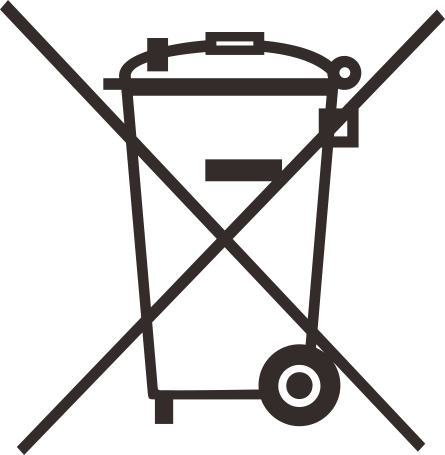
Crossed-out wheeled bin symbol: Indicates that the battery should not be disposed of with unsorted household waste; it must be separately collected.

CE marking: Indicates that the battery (or the device it is intended for) complies with applicable EU health, safety, and environmental protection requirements.

Keep out of reach of children symbol: A warning to prevent ingestion or mishandling, especially for small children.

Do not recharge symbol: This battery is non-rechargeable; attempting to recharge may cause leakage or explosion.
Primary batteries contain various materials (zinc, manganese, lithium, etc.). If improperly discarded (e.g., landfilled or incinerated), the electrolyte can leak and cause soil and water contamination; heavy metals may accumulate in the environment. Swallowing a battery can cause injury; batteries should be kept away from children. Inappropriate disposal increases environmental burdens, wastes recoverable materials, and may lead to fires or injuries during waste handling. Leaking batteries can cause chemical burns; always handle with care.
This information is provided to support end‑users in responsible battery use and disposal, in line with EU waste legislation.
The above information is in conformity with the following legislations: REGULATION (EU) 2023/1542 OF THE EUROPEAN PARLIAMENT AND OF THE COUNCIL of 12 July 2023 on the harmonisation of the laws of the Member States relating to sustainability, safety, labeling/information of Batteries — battery was assessed and found to be in conformity with the enforceable requirements of Articles 6, 13 of the Regulation.
Supplier responsibility note: We understand that the OEM of the device which contains the battery, or battery supplied by the OEM as a replacement part in the European Economic Area (EEA), has the responsibility of preparing the DOC & TDC. As a battery supplier stipulated in Article 39, we will provide the information included in this document as backup to our customers who are manufacturers.
Disclaimer: The information provided above is supplied by Newleader based on current product characteristics and EU regulatory requirements. This information is subject to change in response to amendments of legal requirements or changes in product characteristics. Newleader reserves the right to modify the content at any time without prior notice.


