
English
Views: 0 Author: Site Editor Publish Time: 2026-08-27 Origin: Site


The 18650 battery is one of the most widely used cylindrical lithium-ion battery formats in the world. Its compact size, relatively high energy density, good cycle life, and flexible configuration make it suitable for thousands of electronic and industrial applications.
Although the name “18650” may look like a battery model number, it actually refers primarily to the physical dimensions of the cylindrical cell. Different 18650 cells can have significantly different capacities, discharge currents, chemical compositions, and performance characteristics.
For engineers, buyers, product designers, and end users, understanding these differences is important when selecting an 18650 battery or designing an 18650 battery pack.
This guide explains the key specifications of 18650 batteries, including voltage, capacity, discharge current, dimensions, charging requirements, series and parallel configurations, BMS protection, and common applications.

An 18650 battery is a cylindrical rechargeable battery with a nominal diameter of approximately 18 mm and a nominal length of approximately 65 mm.
The “18650” designation generally comes from:
18 — approximately 18 mm in diameter
65 — approximately 65 mm in length
0 — cylindrical cell format
The actual dimensions can vary slightly depending on the manufacturer, cell construction, terminal design, protective components, and outer wrapping.
An 18650 cell is normally a rechargeable lithium-ion cell, although the exact chemistry and performance characteristics depend on the specific cell.
It is important to distinguish an 18650 cell from an 18650 battery pack.
A single 18650 cell is one cylindrical cell. Several cells can be connected in series and/or parallel to create a battery pack with a higher voltage, higher capacity, or both.
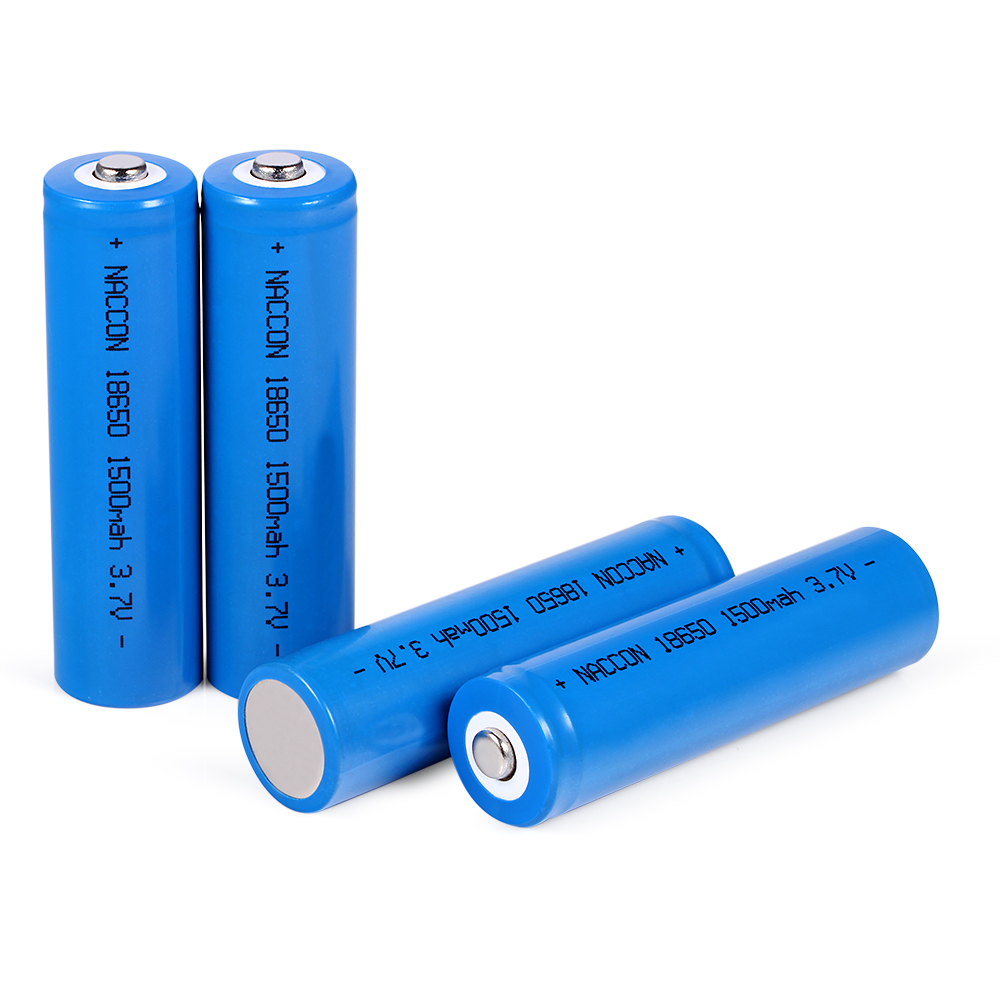
Voltage is one of the most important specifications when selecting an 18650 battery.
For conventional lithium-ion 18650 cells, the most common specifications are:
Specification | Typical Value |
|---|---|
Nominal voltage | 3.6V or 3.7V |
Fully charged voltage | 4.2V |
Recommended lower voltage | Usually around 2.5–3.0V, depending on the cell |
Battery chemistry | Lithium-ion |
The difference between 3.6V and 3.7V does not necessarily mean that one battery is fundamentally different from the other.
The nominal voltage is a representative value used to describe the average operating voltage of the cell. The actual voltage changes continuously during charging and discharging.
For example, a typical lithium-ion 18650 cell may operate approximately as follows:
Fully charged → 4.2V
Normal operating range → around 3.6–3.7V
Near discharge cutoff → approximately 2.5–3.0V
The exact operating limits should always follow the manufacturer's datasheet.
The battery voltage must be compatible with the electrical system.
Using an incorrect voltage may result in:
Poor equipment performance
Battery protection activation
Overheating
Charging problems
Damage to electronic components
Reduced battery life
Therefore, voltage should always be checked before replacing or designing an 18650 battery.

Battery capacity is normally expressed in mAh, or milliamp-hours.
For example:
18650 2000mAh
18650 2500mAh
18650 3000mAh
18650 3500mAh
18650 3600mAh
The capacity indicates approximately how much electrical charge the battery can deliver under specified testing conditions.
For example, a theoretical 3000mAh battery could deliver:
3000mA for approximately 1 hour
1500mA for approximately 2 hours
750mA for approximately 4 hours
However, real-world operating time is not calculated simply by dividing capacity by current. Battery temperature, discharge rate, cutoff voltage, battery age, and equipment efficiency can all affect actual runtime.

Not necessarily.
A high-capacity cell may provide longer runtime, but it may not be suitable for applications requiring very high discharge current.
For example, one 18650 cell may have:
3500mAh capacity / moderate discharge current
while another may have:
2500mAh capacity / high discharge current
The second cell may be more suitable for high-power equipment.
Therefore, capacity and discharge capability should always be evaluated together.
Discharge current indicates how much current the battery can safely deliver to the load.
It is particularly important for applications such as:
Power tools
Electric equipment
Portable devices
Robotics
Mobility products
Industrial equipment
High-power lighting
Energy storage systems
An 18650 cell may be specified with a continuous discharge current such as:
5A
10A
15A
20A
25A
30A or higher, depending on the cell design
However, the advertised current should not be considered without checking the manufacturer's test conditions.

These two specifications are different.
Continuous discharge current refers to the current that the cell can continuously deliver under specified conditions.
Peak or pulse discharge current refers to a higher current that may only be allowed for a limited period.
For battery pack design, the continuous discharge requirement is generally more important.
For example, if an application requires 12A continuously, choosing a cell advertised as “20A peak” does not automatically mean it is suitable.
The cell's continuous discharge specification, operating temperature, cutoff voltage, and thermal conditions should all be considered.
The standard 18650 format is approximately:
18 mm × 65 mm
However, the actual finished dimensions can be slightly different.
The battery may also have:
PVC wrapping
Insulation rings
Flat terminals
Button-top terminals
Protection components
Nickel tabs
Wires
Connectors
These additional components can increase the overall dimensions.
For battery pack design, engineers should therefore consider the actual finished dimensions, rather than assuming that every 18650 cell occupies exactly 18 × 65 mm.
This is especially important when the battery must fit into a compact enclosure.

Two common terminal designs are:

The positive terminal is relatively flat.
Flat-top cells are commonly used in:
Battery packs
Electronic equipment
Industrial battery assemblies
Devices where cells are connected using nickel strips
The positive terminal protrudes slightly.
Button-top cells are commonly found in some consumer devices and applications where the battery contacts directly with a spring-loaded terminal.
The two versions are not always interchangeable.
Before selecting a replacement cell, the physical terminal design should be checked carefully.

Not all cylindrical lithium-ion batteries have exactly the same chemistry.
Common lithium-ion chemistries include:
NMC — Nickel Manganese Cobalt
NCA — Nickel Cobalt Aluminum
LCO — Lithium Cobalt Oxide
LMO — Lithium Manganese Oxide
LFP — Lithium Iron Phosphate
However, not every chemistry is commonly available in the 18650 format, and the voltage characteristics differ between chemistries.
For example, conventional lithium-ion 18650 cells are commonly around 3.6–3.7V nominal, while lithium iron phosphate cells have a nominal voltage of approximately 3.2V.
Therefore, simply specifying “18650” is not enough when purchasing or designing a battery.
A complete specification should include the chemistry or exact cell model.
This depends on the required:
Voltage
Capacity
Discharge current
Energy
Physical dimensions
The two basic battery pack configurations are:
Series connection (S)
and
Parallel connection (P).
![}NVBGGFYF9V9CX]}@}UV9J1 副本.JPG](http://ikrorwxhpqlllm5m-static.micyjz.com/cloud/pmBppKkqljSRmlniljnrjq/NVBGGFYF9V9CXUV9J1-fuben.jpg)
“S” stands for series.
When cells are connected in series, their voltage increases while the capacity in Ah remains approximately the same.
For example:
1 × 18650 cell
Nominal voltage:
3.7V
2 cells connected in series
Nominal voltage:
7.4V
3 cells connected in series
Nominal voltage:
11.1V
4 cells connected in series
Nominal voltage:
14.8V
5 cells connected in series
Nominal voltage:
18.5V
The actual voltage depends on the chemistry and the charge/discharge state.
For a conventional 3.7V nominal lithium-ion cell, a 3S battery pack would typically be:
3 × 3.7V = 11.1V nominal
and approximately:
3 × 4.2V = 12.6V fully charged
“P” stands for parallel.
When cells are connected in parallel:
Voltage remains approximately the same
Capacity increases
Available current capability can increase
For example, if one cell has a capacity of 3000mAh:
3000mAh
6000mAh
9000mAh
12000mAh
Therefore, a 3S2P configuration means:
3 cells in series
2 cells in parallel
6 cells total
If each cell is 3.7V and 3000mAh, the theoretical pack specification is approximately:
11.1V 6000mAh

Here are some common configurations:
Configuration | Cells | Nominal Voltage* | Capacity with 3000mAh Cells |
|---|---|---|---|
1S1P | 1 | 3.7V | 3000mAh |
2S1P | 2 | 7.4V | 3000mAh |
2S2P | 4 | 7.4V | 6000mAh |
3S1P | 3 | 11.1V | 3000mAh |
3S2P | 6 | 11.1V | 6000mAh |
4S2P | 8 | 14.8V | 6000mAh |
5S2P | 10 | 18.5V | 6000mAh |
10S2P | 20 | 37V | 6000mAh |
*Nominal voltage shown for a conventional 3.7V lithium-ion cell.
The actual pack voltage and capacity depend on the selected cell chemistry and specifications.
Battery energy is usually expressed in Wh, or watt-hours.
A simple calculation is:
Energy (Wh) = Voltage (V) × Capacity (Ah)
For example, a 3.7V 3000mAh cell:
3000mAh = 3Ah
Therefore:
3.7V × 3Ah = 11.1Wh
For a 3S2P pack using the same cells:
Nominal voltage:
3.7V × 3 = 11.1V
Capacity:
3Ah × 2 = 6Ah
Energy:
11.1V × 6Ah = 66.6Wh
This is useful when estimating battery runtime and comparing different battery configurations.
Battery runtime depends on the load.
A simplified calculation is:
Runtime (hours) ≈ Battery capacity (Ah) ÷ Load current (A)
For example, a 3000mAh battery supplying a 1A load:
3Ah ÷ 1A ≈ 3 hours
However, this is only a theoretical estimate.
Actual runtime can be affected by:
Battery efficiency
Discharge current
Temperature
Battery age
Cutoff voltage
Device efficiency
Battery internal resistance
BMS protection
Actual battery capacity
For high-precision applications, engineers should use the actual discharge curve of the selected cell rather than relying solely on a simple calculation.
When multiple lithium-ion cells are assembled into a rechargeable battery pack, a Battery Management System (BMS) or appropriate protection circuit is often required, depending on the application and pack architecture.
A BMS can provide functions such as:
Overcharge protection
Over-discharge protection
Over-current protection
Short-circuit protection
Cell balancing
Temperature monitoring
Communication functions in advanced battery systems
For example, in a 4S lithium-ion pack, the BMS monitors the individual cell groups to help maintain safe operating conditions.
The appropriate BMS must match:
Number of cells in series
Battery chemistry
Maximum charging current
Maximum discharge current
Protection voltage
Temperature requirements
Communication requirements
Choosing a BMS solely based on the battery's nominal voltage is not sufficient.
When several cells are connected in series, their voltage levels may gradually become different.
For example, in a 4S pack, the four cell groups may not always have exactly the same voltage.
If the imbalance becomes significant, it can affect:
Usable capacity
Charging performance
Battery life
Safety
Overall pack performance
A BMS with balancing functionality can help manage these differences.
There are two common approaches:
Excess energy from higher-voltage cells is dissipated as heat.
Energy is transferred between cells or cell groups.
Active balancing can be more sophisticated but may also increase system complexity and cost.
A conventional lithium-ion 18650 cell is generally charged using a constant-current/constant-voltage (CC/CV) charging method.
The charging process can be simplified as:
The charger supplies a controlled charging current while the battery voltage rises.
Once the battery reaches its specified maximum charging voltage, the charger maintains the voltage while the charging current gradually decreases.
Charging should stop according to the cell manufacturer's specified termination conditions.
Using an unsuitable charger can result in:
Overcharging
Excessive heating
Reduced battery life
Cell damage
Potential safety hazards
Therefore, never assume that all cylindrical batteries can use the same charger simply because they have the same physical dimensions.
These two terms are often confused.
Usually measured in:
mAh or Ah
It describes the amount of electrical charge.
Usually measured in:
Wh
It considers both voltage and capacity.
For example:
3.7V × 3Ah = 11.1Wh
Two batteries may have similar capacities but different voltages, resulting in different energy levels.
This distinction becomes particularly important when comparing battery packs for electric vehicles, portable power stations, and industrial equipment.
Not all 18650 cells are designed for the same purpose.
These cells prioritize energy density and longer runtime.
They can be suitable for:
Portable electronics
Low-to-medium power equipment
Battery backup systems
Energy storage applications
These cells prioritize higher discharge current.
They can be suitable for:
Power tools
High-power equipment
Robotics
Electric mobility applications
Applications with high instantaneous power demand
When selecting an 18650 cell, the goal should not simply be to find the highest mAh rating.
The correct approach is to balance:
Capacity + discharge current + cycle life + temperature + physical size + cost.
When selecting an 18650 cell, consider the following specifications.
Confirm the required nominal and maximum voltage.
Determine how much runtime or energy the application requires.
Check the maximum current required by the equipment.
If the equipment has a startup or acceleration current surge, consider the peak requirement.
Confirm that the cell can physically fit inside the equipment or battery enclosure.
Check the required charging and discharging temperature range.
For frequently recharged equipment, cycle life can be an important consideration.
Determine whether the battery requires a BMS, PCM, fuse, NTC, or other protection components.
Depending on the application and destination market, battery products may require appropriate documentation and transportation testing.
The best battery is ultimately determined by the equipment's actual electrical and mechanical requirements.

18650 batteries are used in a wide range of applications, including:
Compact battery packs can be used in portable electronic devices where rechargeable energy storage is required.
High-power 18650 cells can be assembled into battery packs for certain cordless power tools.
Robots may use 18650 battery packs because of their relatively high energy density and flexible pack configurations.
Rechargeable 18650 cells are commonly used in some portable lighting products.
Customized 18650 battery packs can provide power for monitoring equipment, instruments, communication devices, and other industrial systems.
Multiple cells can be assembled into battery packs to provide backup power for electronic equipment.
Depending on the power requirements and system design, 18650 cells can also be used in certain electric mobility products.
The 18650 format has several important advantages.
The cylindrical format makes it relatively easy to arrange cells into different battery configurations.
Lithium-ion chemistry provides significantly higher energy density than many traditional rechargeable battery technologies.
Cells can be connected in different series and parallel combinations.
Different cells can be optimized for capacity, discharge current, cycle life, or other performance requirements.
The 18650 format has been widely adopted for many years, resulting in extensive manufacturing experience and supporting technologies.

Despite their advantages, 18650 batteries are not suitable for every application.
Potential limitations include:
Individual cell voltage is relatively low
Battery packs may require multiple cells
Cell matching is important for multi-cell packs
Lithium-ion batteries require appropriate protection
High-current applications can generate significant heat
Mechanical and thermal design are important
Transportation requirements may apply
Battery performance decreases over time
For high-power applications, thermal management can become particularly important.
When multiple 18650 cells are connected to form a battery pack, the cells should have compatible characteristics.
Important parameters include:
Capacity
Internal resistance
Voltage
Discharge performance
Aging characteristics
Using significantly different cells in the same battery pack can lead to uneven charging and discharging.
For series-connected packs, cell imbalance can become especially important.
Professional battery pack manufacturers typically evaluate and match cells according to the requirements of the specific battery pack.
Lithium-ion batteries should always be handled and designed appropriately.
Important safety considerations include:
Do not short-circuit the cell
Do not overcharge
Do not over-discharge
Avoid mechanical damage
Do not expose the cell to excessive heat
Use an appropriate charger
Use suitable protection circuitry
Follow the manufacturer's specifications
Store and transport batteries according to applicable requirements
For battery packs, additional protection may include:
BMS/PCM
Fuse
NTC temperature sensor
Over-current protection
Short-circuit protection
Mechanical protection
Thermal management
Battery safety should be considered from the cell-selection stage through final product assembly.
Suppose an application requires approximately:
12V, 6Ah
and the selected lithium-ion 18650 cell is:
3.7V, 3000mAh
First, determine the series connection:
12V ÷ 3.7V ≈ 3.24
A practical configuration would typically be 3S, giving:
3.7V × 3 = 11.1V nominal
Then determine the parallel connection:
6Ah ÷ 3Ah = 2
Therefore, the theoretical configuration is:
3S2P
Total cells:
3 × 2 = 6 cells
The resulting nominal specification is approximately:
11.1V 6000mAh
The actual pack design would then need to consider discharge current, BMS requirements, enclosure dimensions, wiring, connectors, thermal management, and charging requirements.
A battery pack specification such as:
18650 3S2P 11.1V 6000mAh
can be understood as follows:
18650
The cylindrical cell format.
3S
Three cell groups connected in series.
2P
Two cells connected in parallel within each group.
11.1V
Approximate nominal voltage for conventional 3.7V lithium-ion cells.
6000mAh
Approximate total capacity when using 3000mAh cells in a 2P configuration.
This naming method makes it easier for engineers and purchasers to understand the basic structure of a battery pack.
If you need a customized 18650 battery pack, providing complete specifications can significantly speed up the quotation and engineering evaluation process.
Useful information includes:
Battery cell model
Battery chemistry
Nominal voltage
Capacity
Maximum continuous discharge current
Peak discharge current
Charging current
Battery dimensions
Number of cells
Series/parallel configuration
Connector type
Wire length
Wire specification
BMS/PCM requirements
NTC requirements
Communication requirements
Operating temperature
Charging temperature
Enclosure requirements
Application
Required certifications
Target quantity
If you do not know all of these specifications, providing the original battery, battery label, equipment model, photos, connector photos, or equipment electrical requirements can also help a battery manufacturer evaluate the project.
No. The voltage depends on the battery chemistry. Conventional lithium-ion 18650 cells are commonly specified at 3.6V or 3.7V nominal.
No. “18650” primarily describes the cylindrical cell format and approximate dimensions. Capacity can vary significantly between different 18650 cells.
Not necessarily. The replacement should match important specifications such as chemistry, voltage, capacity, discharge current, dimensions, and terminal configuration.
Yes, when the cells and battery system are designed appropriately. Parallel connections increase capacity and can increase current capability.
Yes. Series connections increase the overall battery voltage.
For conventional 3.7V nominal lithium-ion cells, a 3S pack is approximately 11.1V nominal and 12.6V when fully charged.
No. A 2500mAh cell may provide higher discharge current and be more suitable for high-power applications.
It depends on the required voltage, capacity, discharge current, energy, and physical dimensions. The number can range from a single cell to dozens or more.
The 18650 battery remains an important cylindrical lithium-ion battery format because it offers a practical balance between size, energy density, performance, flexibility, and manufacturing maturity.
However, choosing an 18650 battery should never be based on the “18650” label alone.
The most important specifications to evaluate include:
Voltage → Capacity → Discharge Current → Dimensions → Chemistry → Cycle Life → Temperature → Protection → Application
For battery pack applications, the series/parallel configuration must also be carefully designed.
For example:
3S2P increases voltage and capacity compared with a single cell, while the appropriate BMS and protection design help manage the complete battery pack.
Whether you are designing a new electronic product, replacing an existing battery, or sourcing customized battery packs, providing accurate electrical, mechanical, and application requirements is the best way to select a suitable 18650 battery solution.


